Before our trip to Georgia, we had watched plenty of videos about how to eat khinkali.
What we didn’t watch, however, was how to make one.
In my mind, I had assumed it would be something similar to a Chinese xiao long bao.
It looked simple enough.
A few folds here.
A little pinch there.
Done.
Naturally, I assumed it couldn’t be that difficult.
I was wrong.
Very wrong.
😂
During our cooking class, we learned how to make two of Georgia’s most iconic dishes: khachapuri and khinkali.
Before we could even begin making dumplings, there was another task waiting for us.
Khachapuri.
Since the dough needed time to rise, we started with that first.
While Daniel took charge of preparing the dough, I found myself more interested in what would come later — the khinkali.
Once the dough was set aside to rest, our attention shifted to dumplings.
And that was where things became interesting.
As making khinkali dough takes time and effort, the wrappers had already been prepared for us in advance. Thankfully.
That said, our instructor still gave us the recipe should we ever feel ambitious enough to attempt making everything from scratch at home.
Before we could start folding, we had to prepare the filling.
I remember adding what felt like an alarming amount of water to the meat mixture and immediately questioning whether we were doing it correctly.
When we asked our instructor about it, he explained that the ratio was roughly one-to-one — meat and water.
The purpose, he said, was to create the broth inside the dumpling.
The “juice” that makes khinkali so satisfying when you take that first bite.
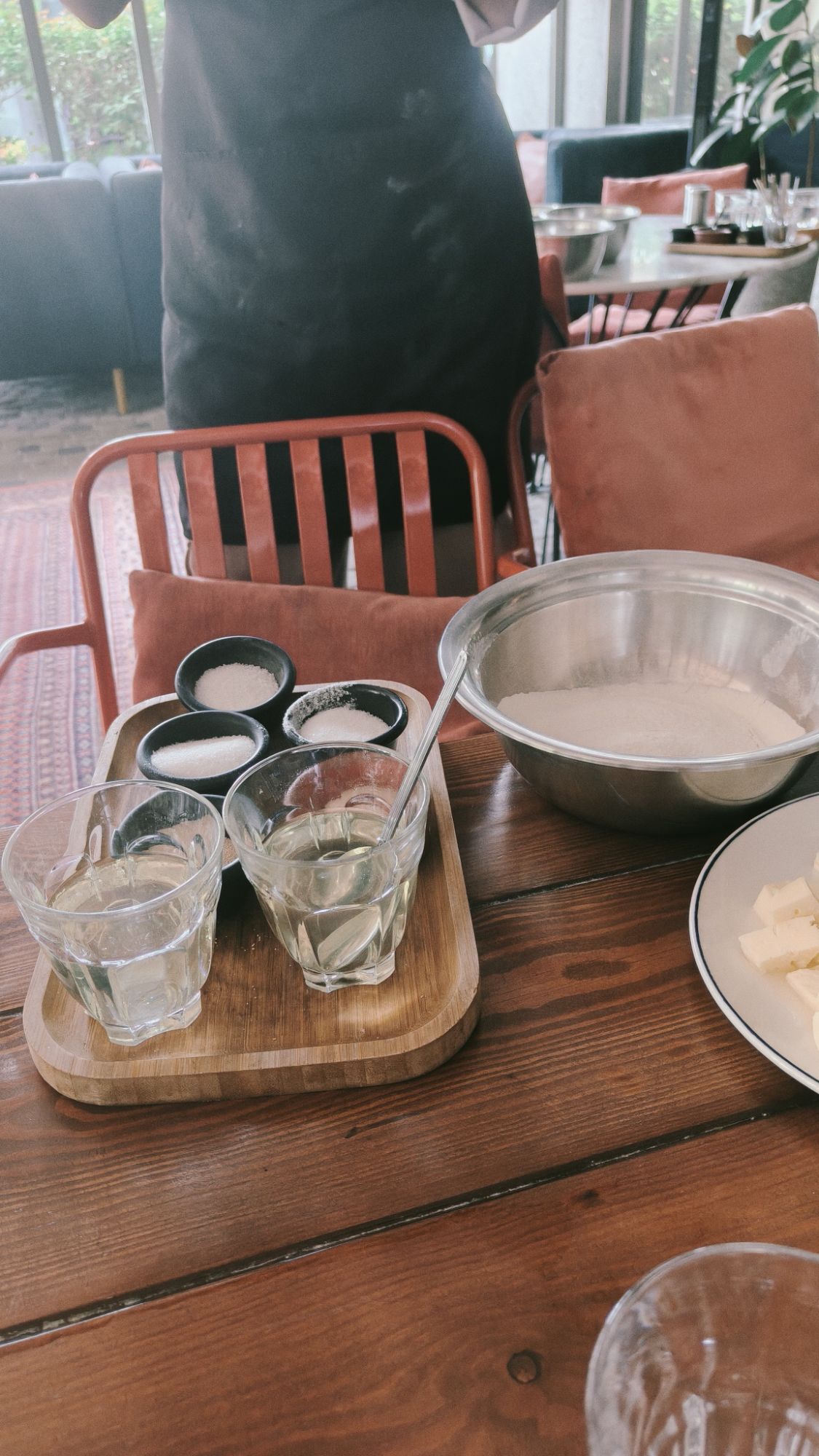
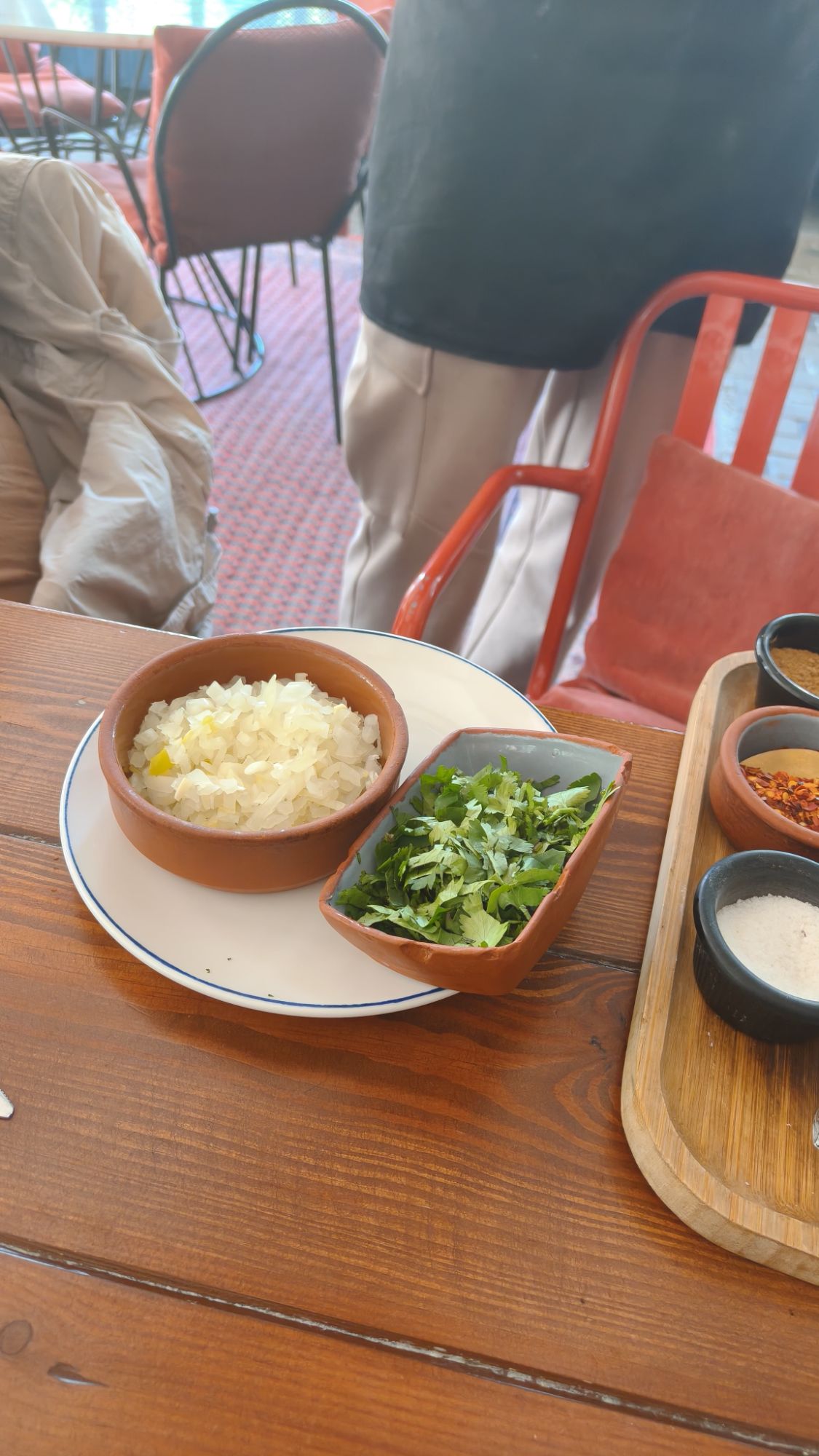
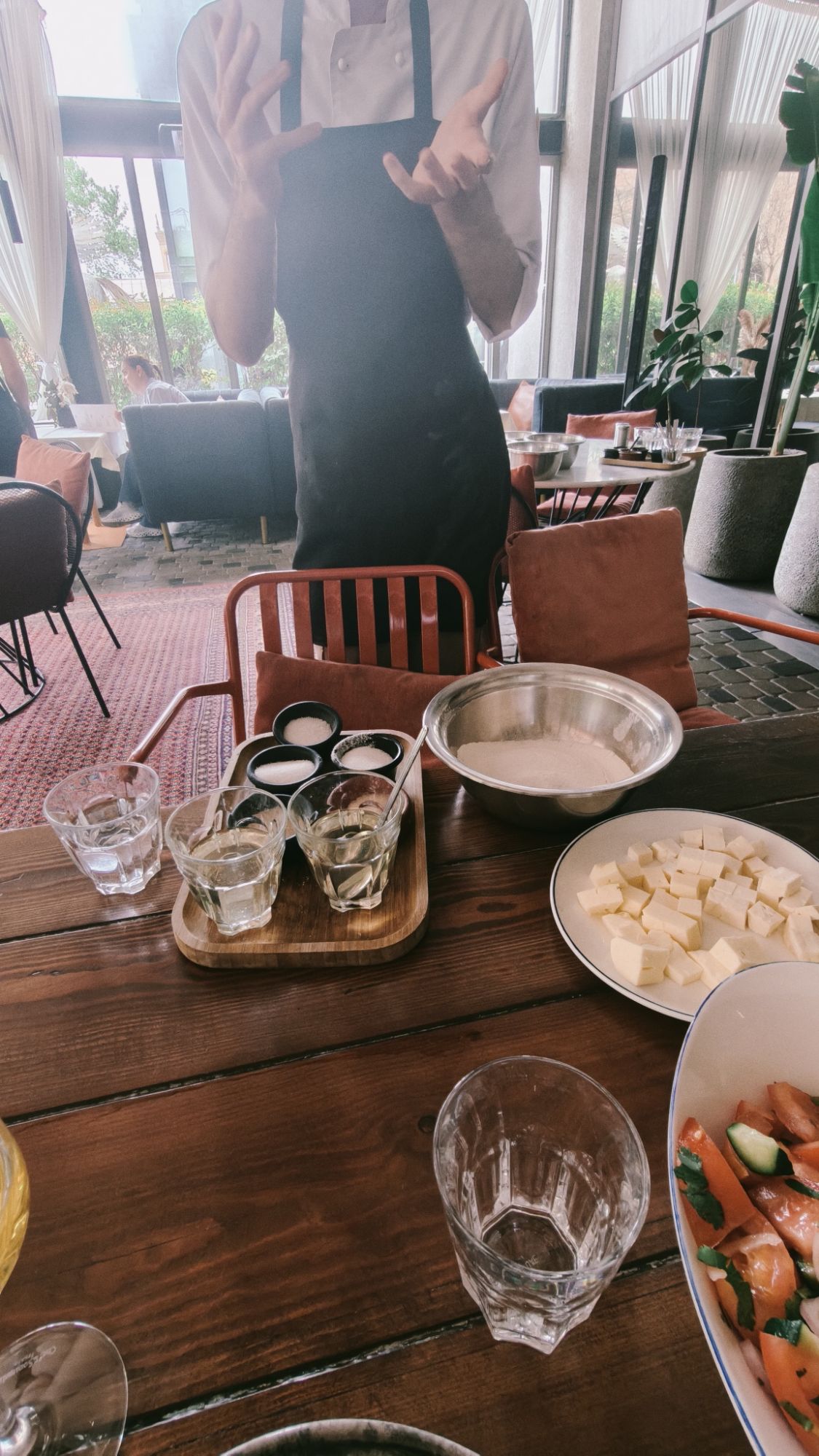
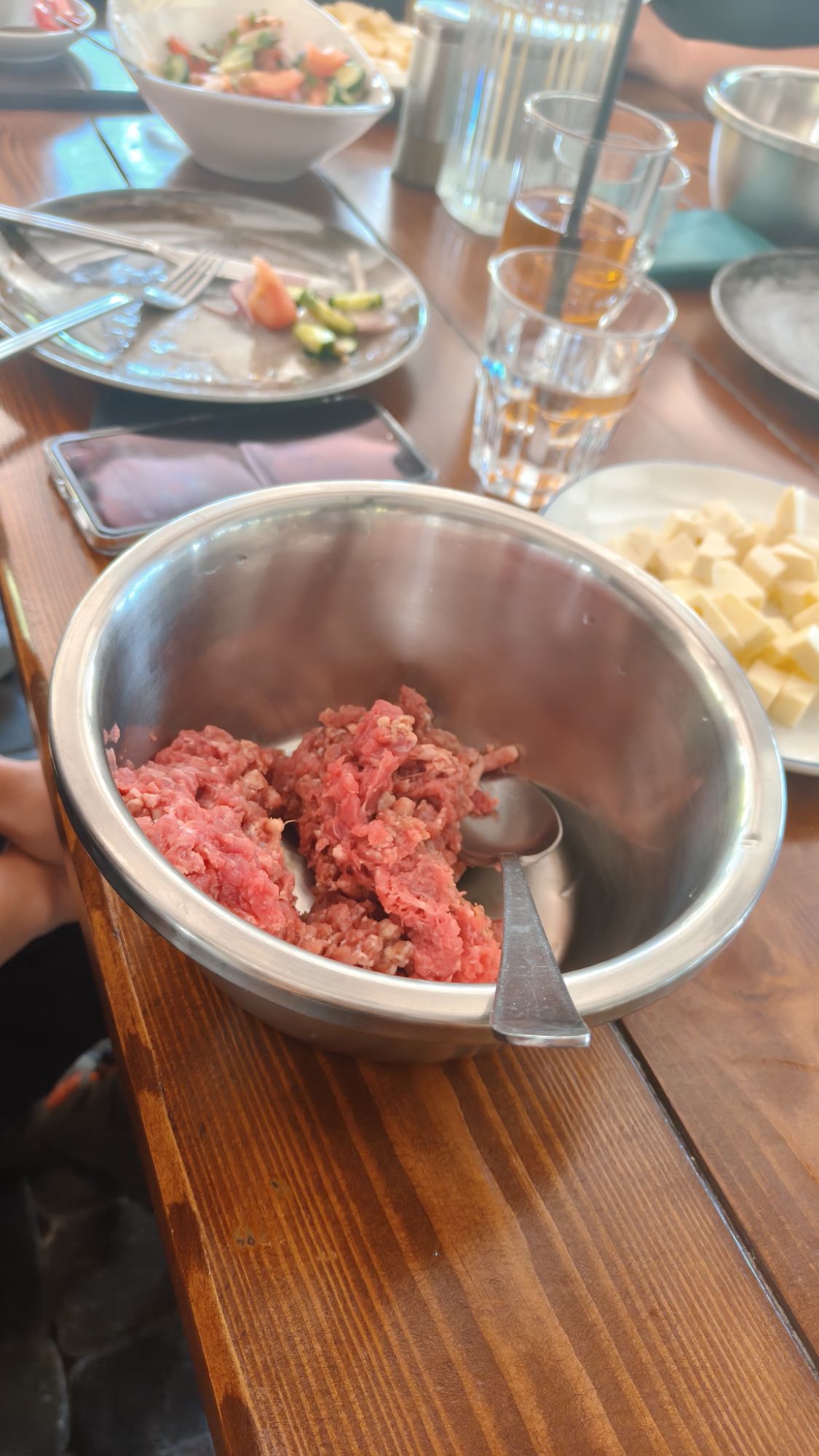
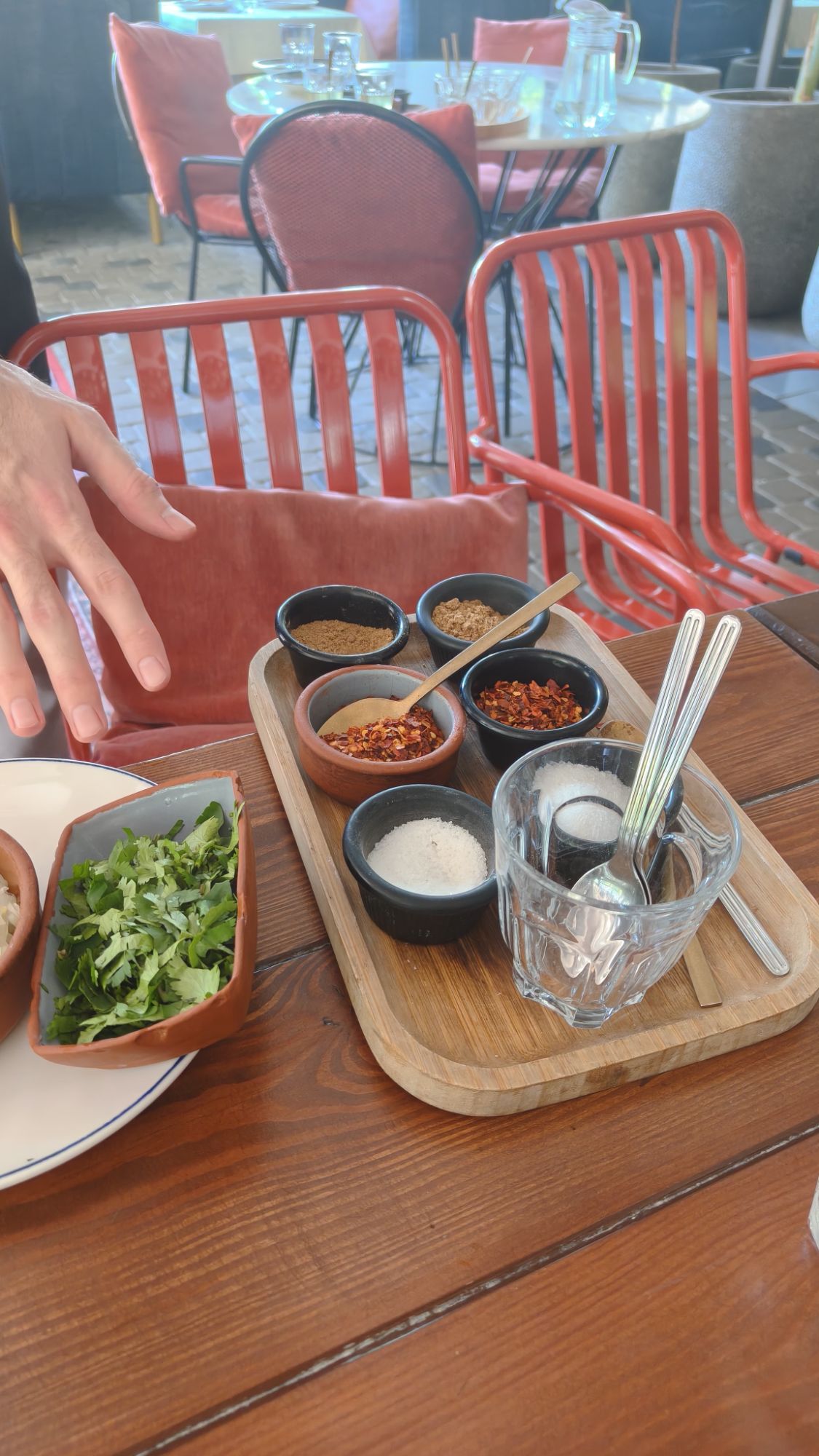
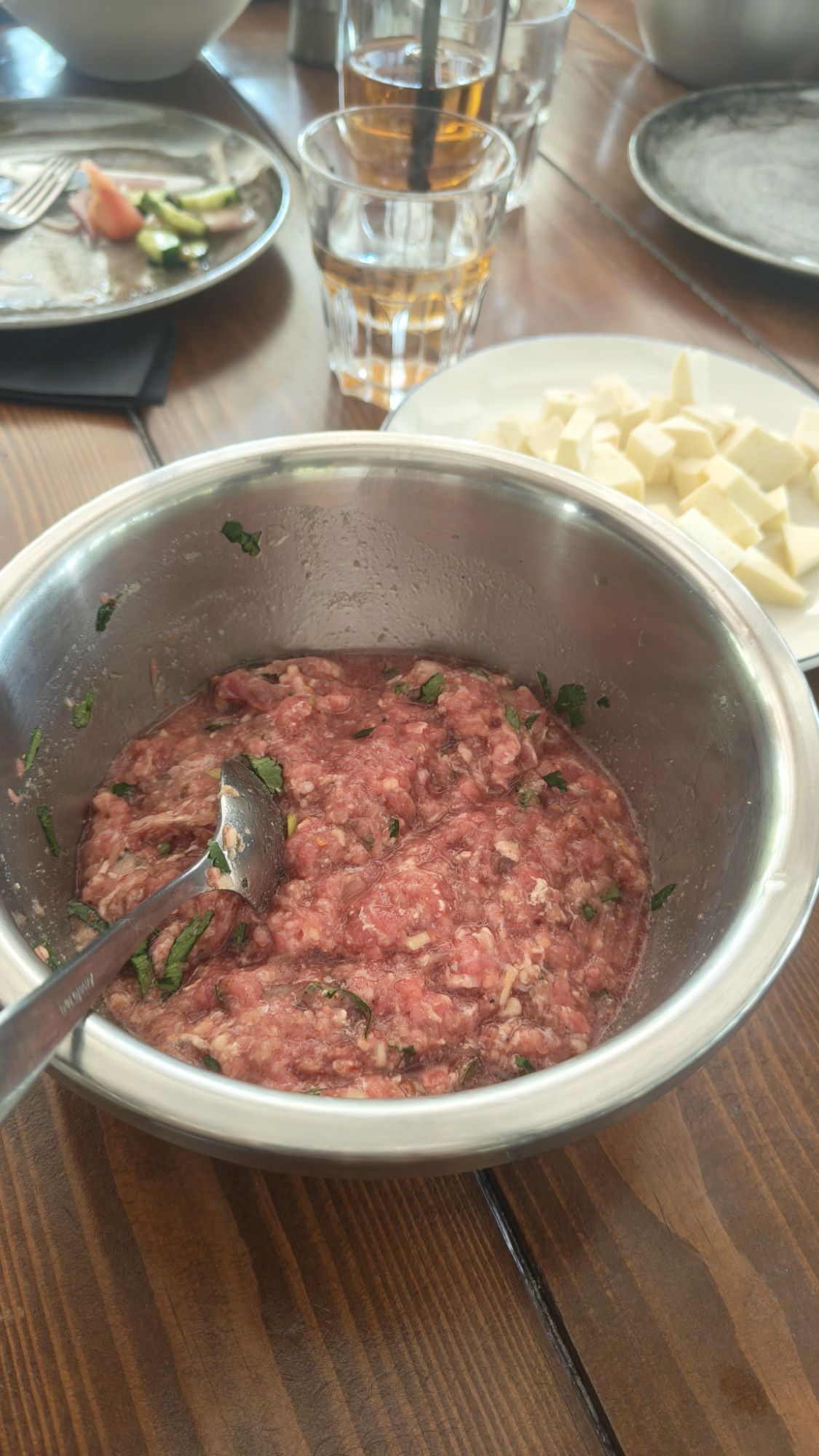
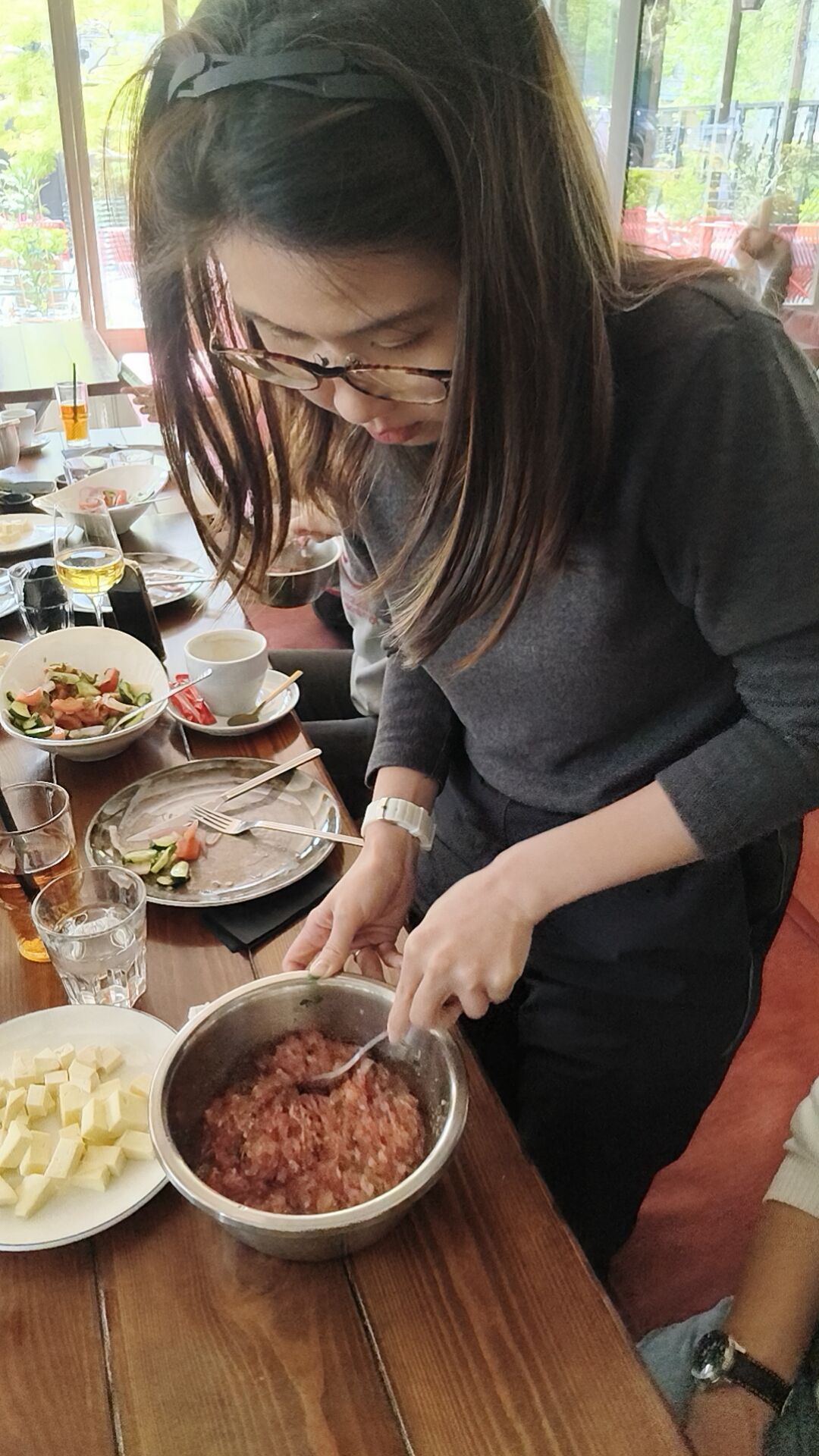
Our instructor patiently demonstrated the technique before allowing us to try it ourselves.
The process didn’t look particularly complicated.
Until we actually attempted it.
According to him, a proper khinkali should have nineteen folds.
Nineteen.
Not ten.
Not twelve.
Nineteen.
As he effortlessly shaped perfect dumplings in front of us, I remember thinking it couldn’t possibly be that difficult.
A few minutes later, reality proved otherwise.
Fold.
Pinch.
Fold again.
Try not to lose count.
Lose count anyway.
Start counting again.
At some point, I became more concerned with keeping the filling intact than achieving nineteen folds.
I wasn’t particularly worried about tearing the wrapper, as it was much thicker than the skin of a Chinese xiao long bao.
What worried me more was the filling.
With all that water mixed into the meat, I was convinced the precious broth would somehow escape before the dumpling was even finished.
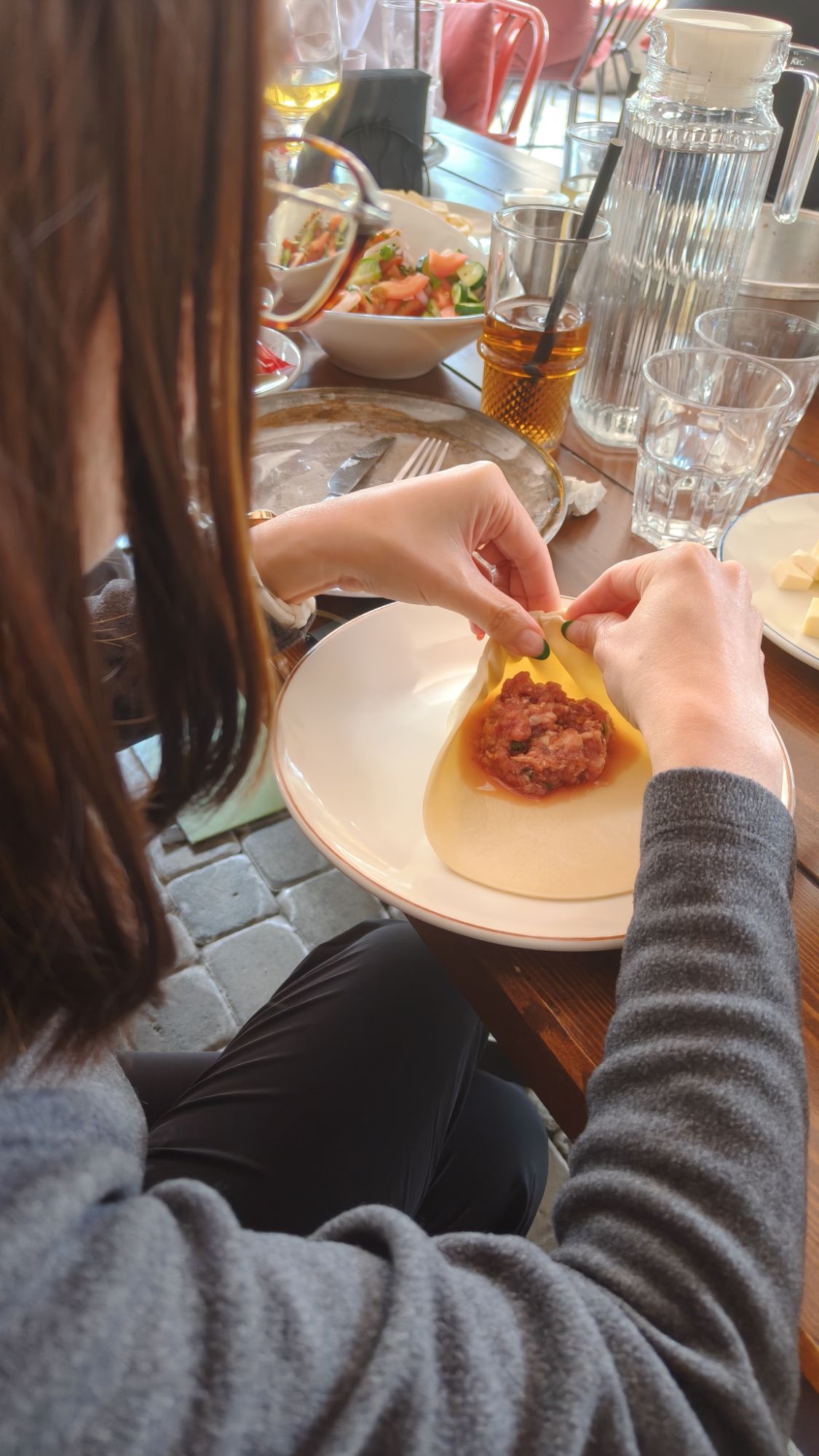
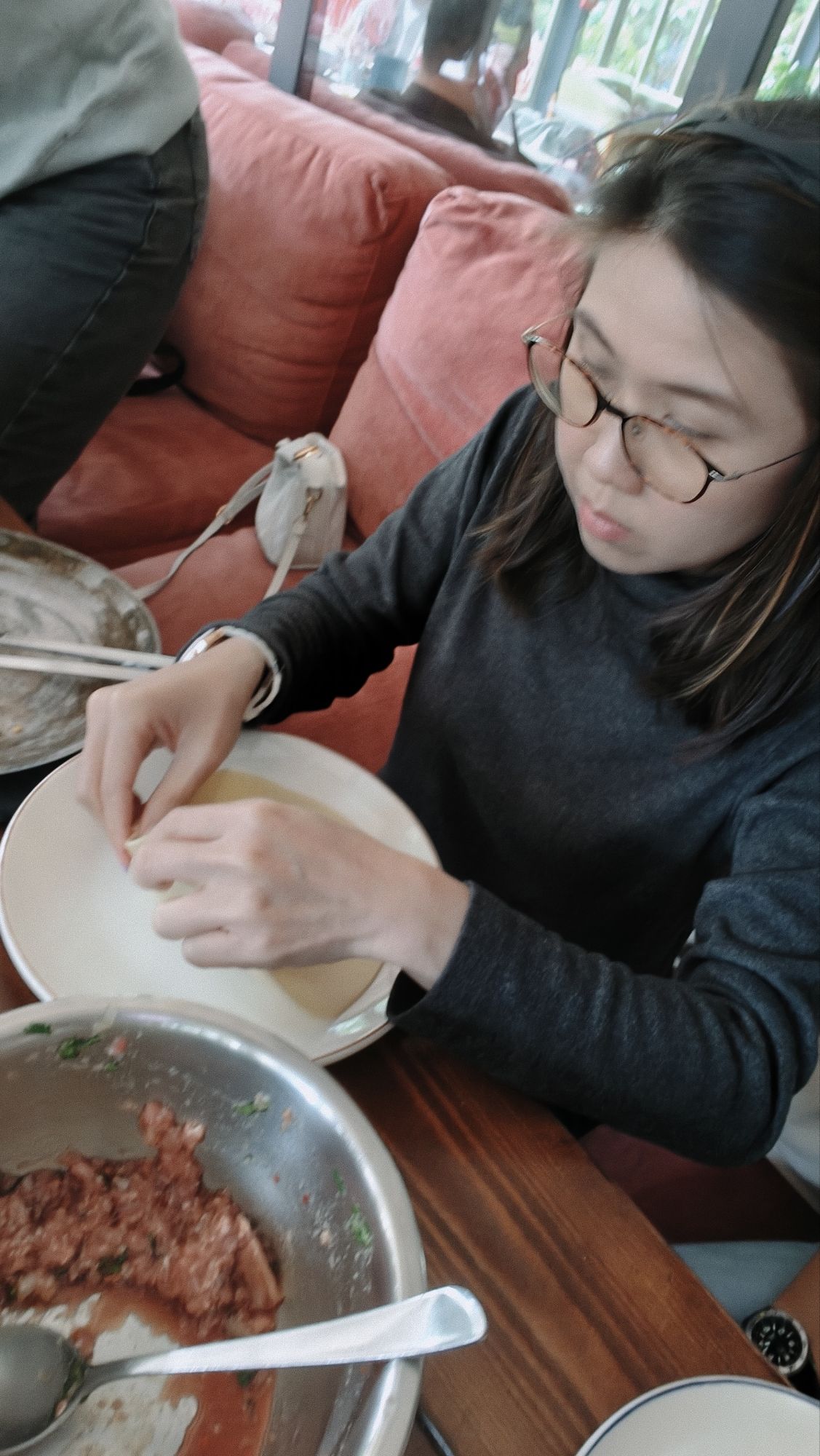
After several attempts, I think we managed somewhere around fifteen or sixteen folds.
Close enough to feel mildly accomplished.
Far enough from nineteen to know we weren’t fooling anyone.
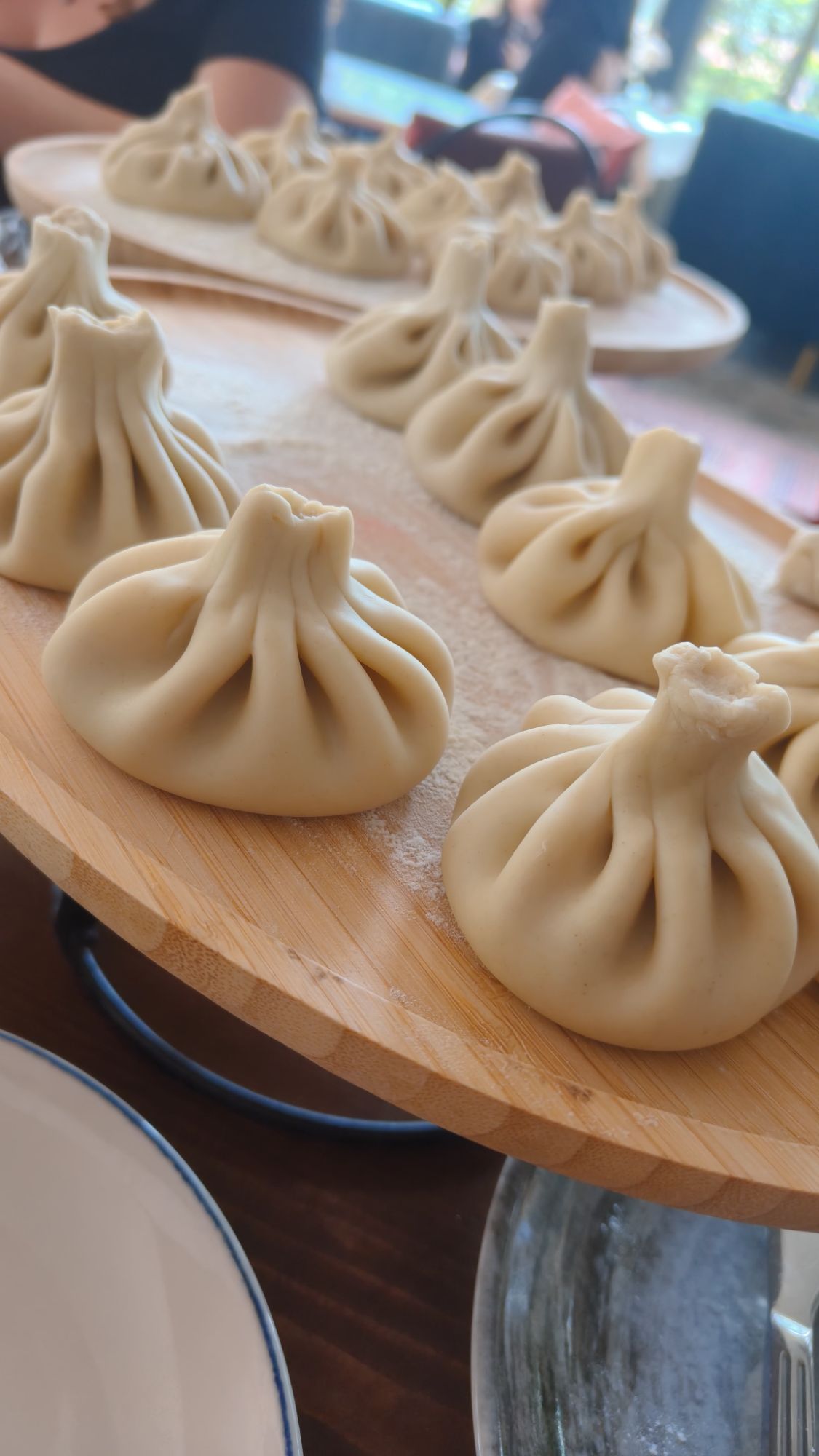
To our surprise, our instructor complimented our work and said our khinkali looked good.
Whether he genuinely meant it or was simply being kind to enthusiastic tourists, I’ll happily take the compliment.
Meanwhile, the khachapuri dough had finished rising and was finally ready.
We filled it generously with cheese before folding and shaping it according to the instructor’s directions.
Then came even more cheese.
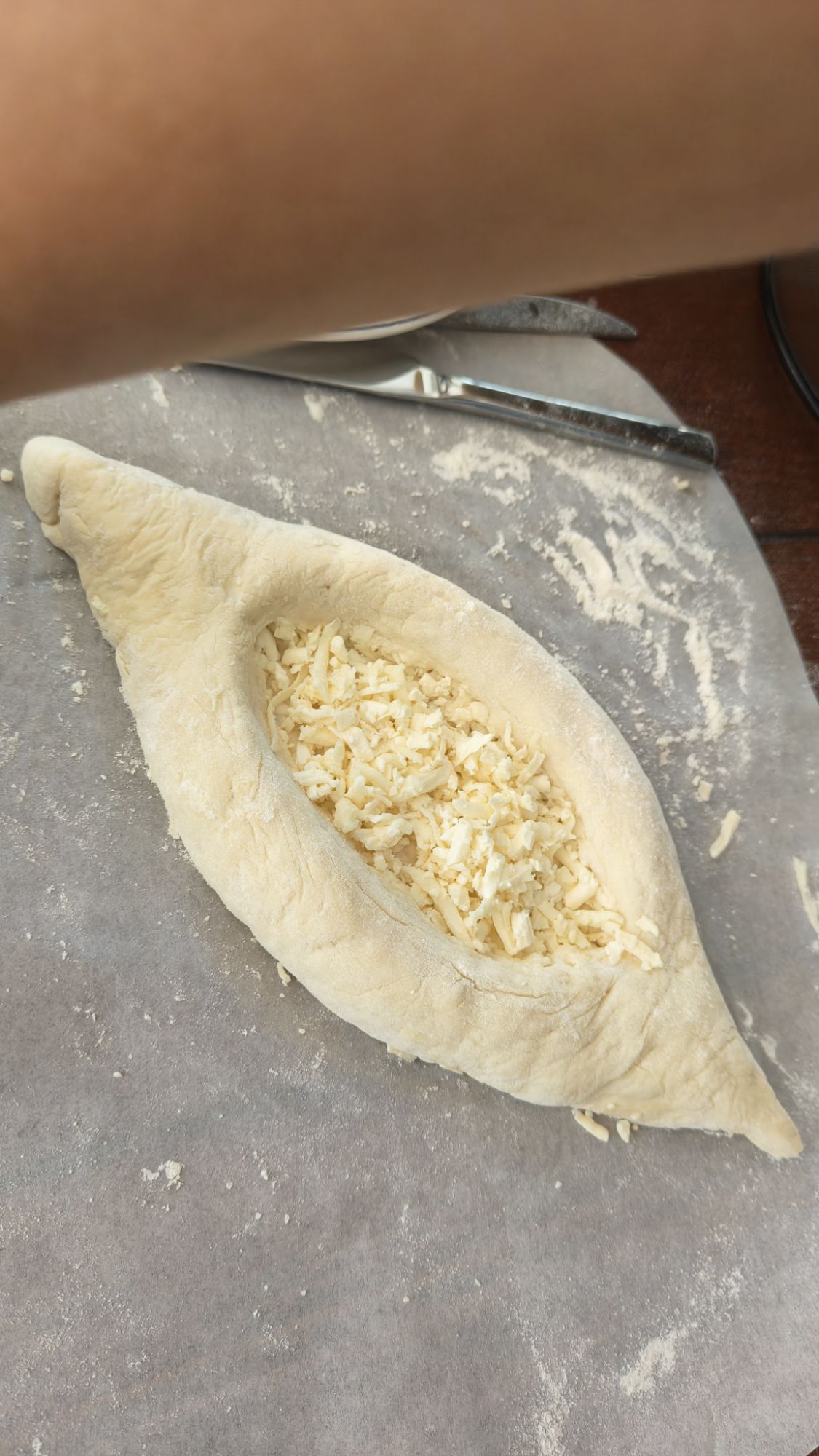
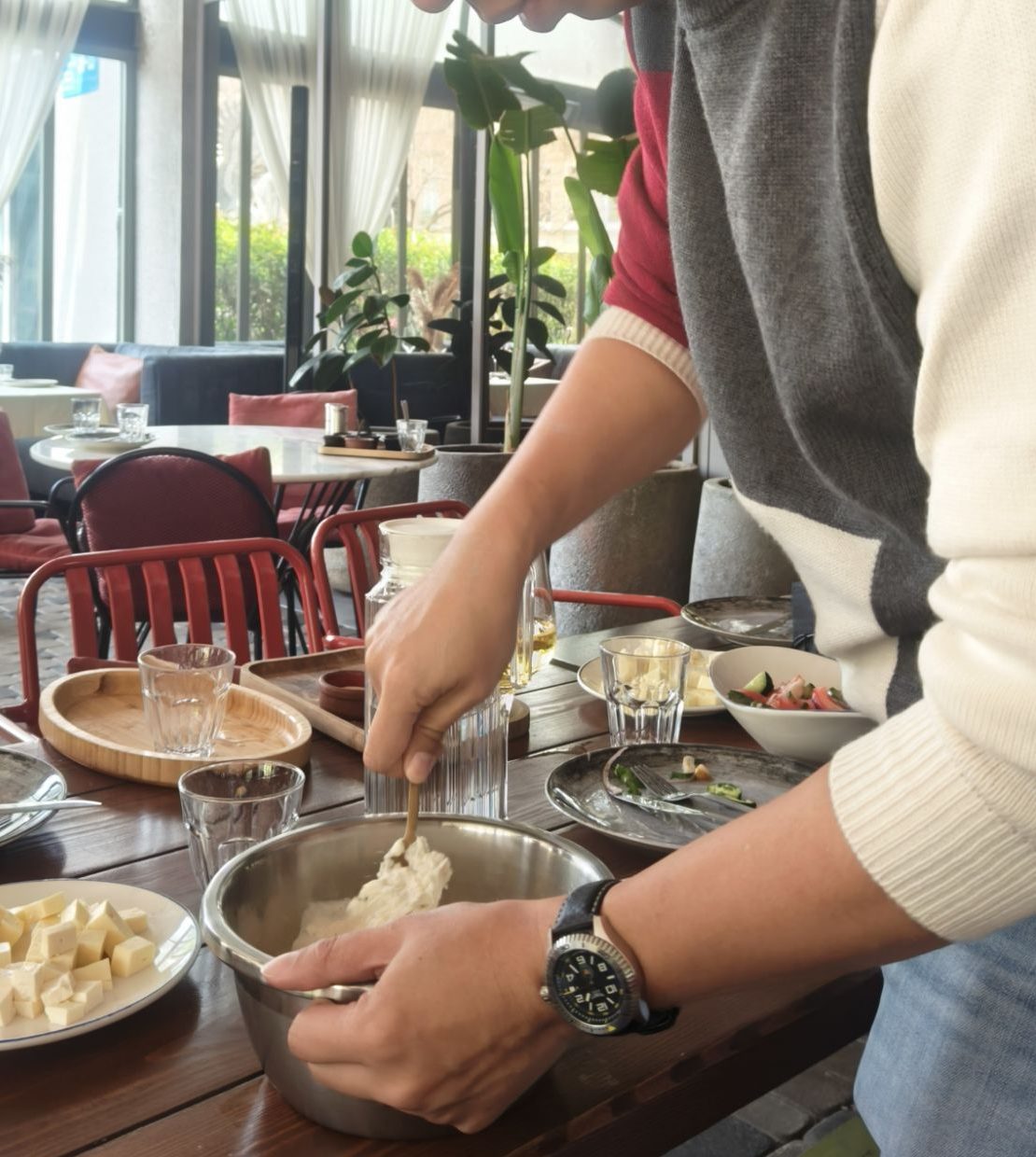
And once it was baked, a fresh egg yolk was added right into the centre — the traditional finishing touch.
Watching it transform from a simple ball of dough into one of Georgia’s most iconic dishes felt strangely satisfying.
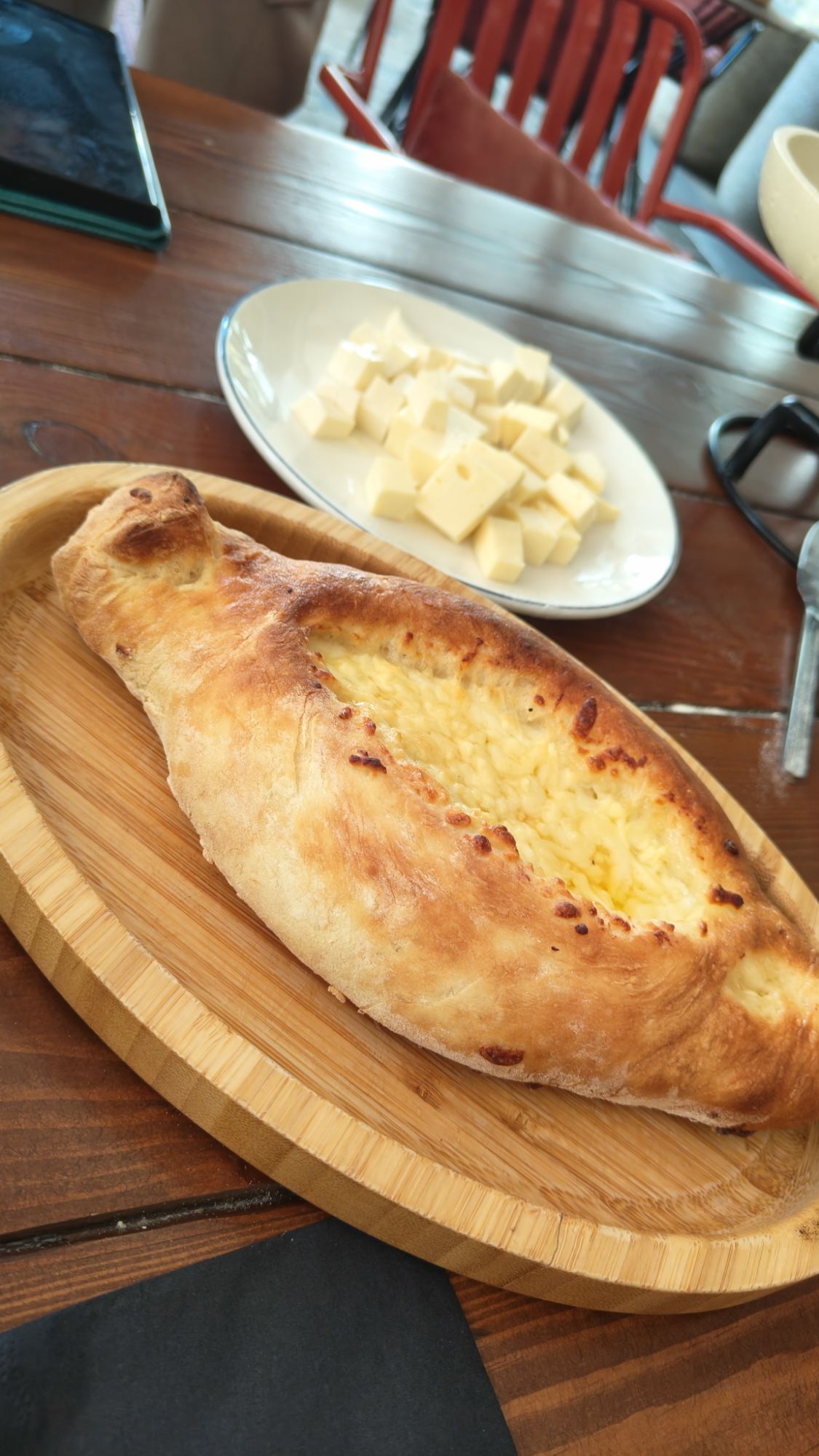
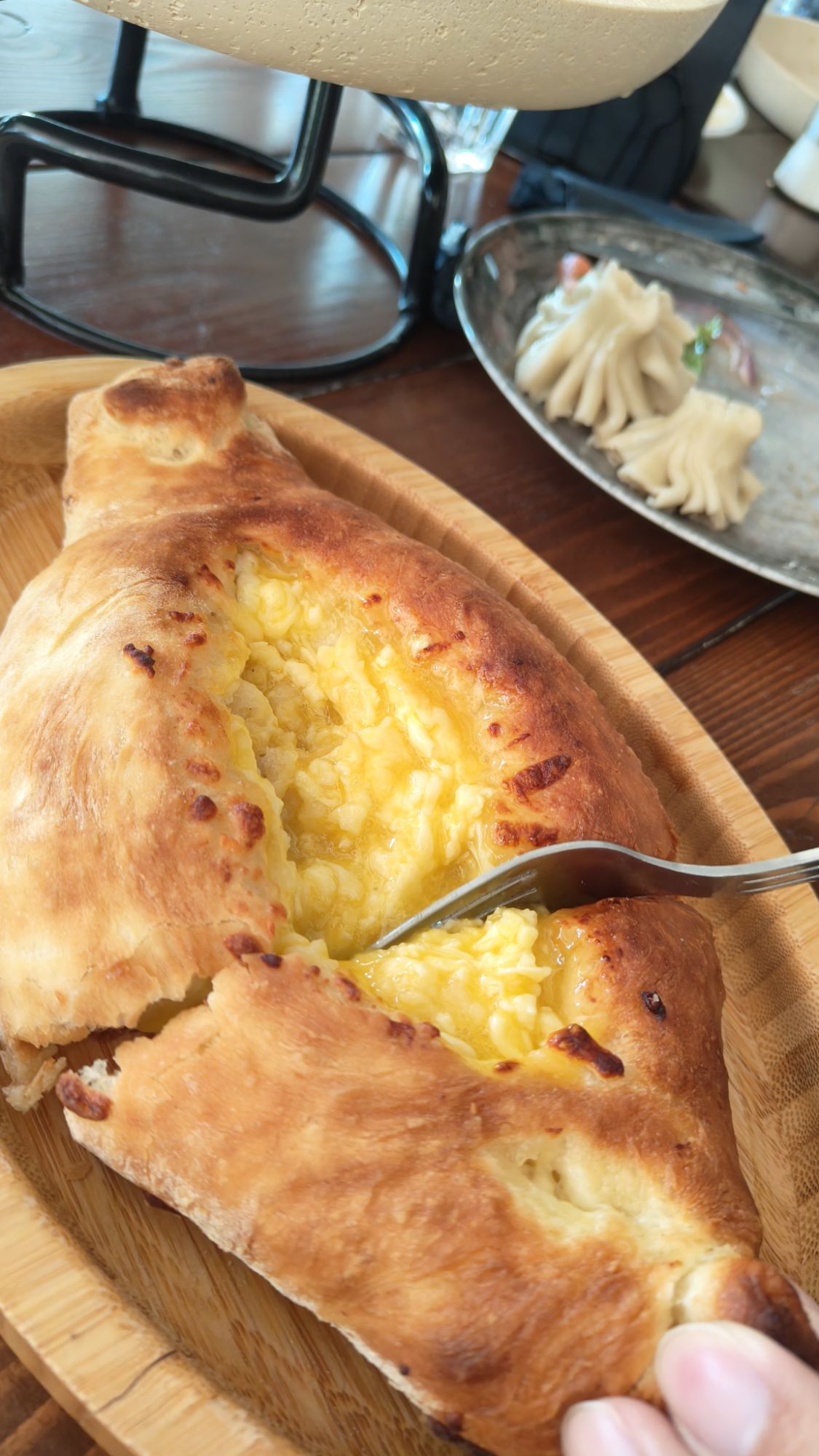
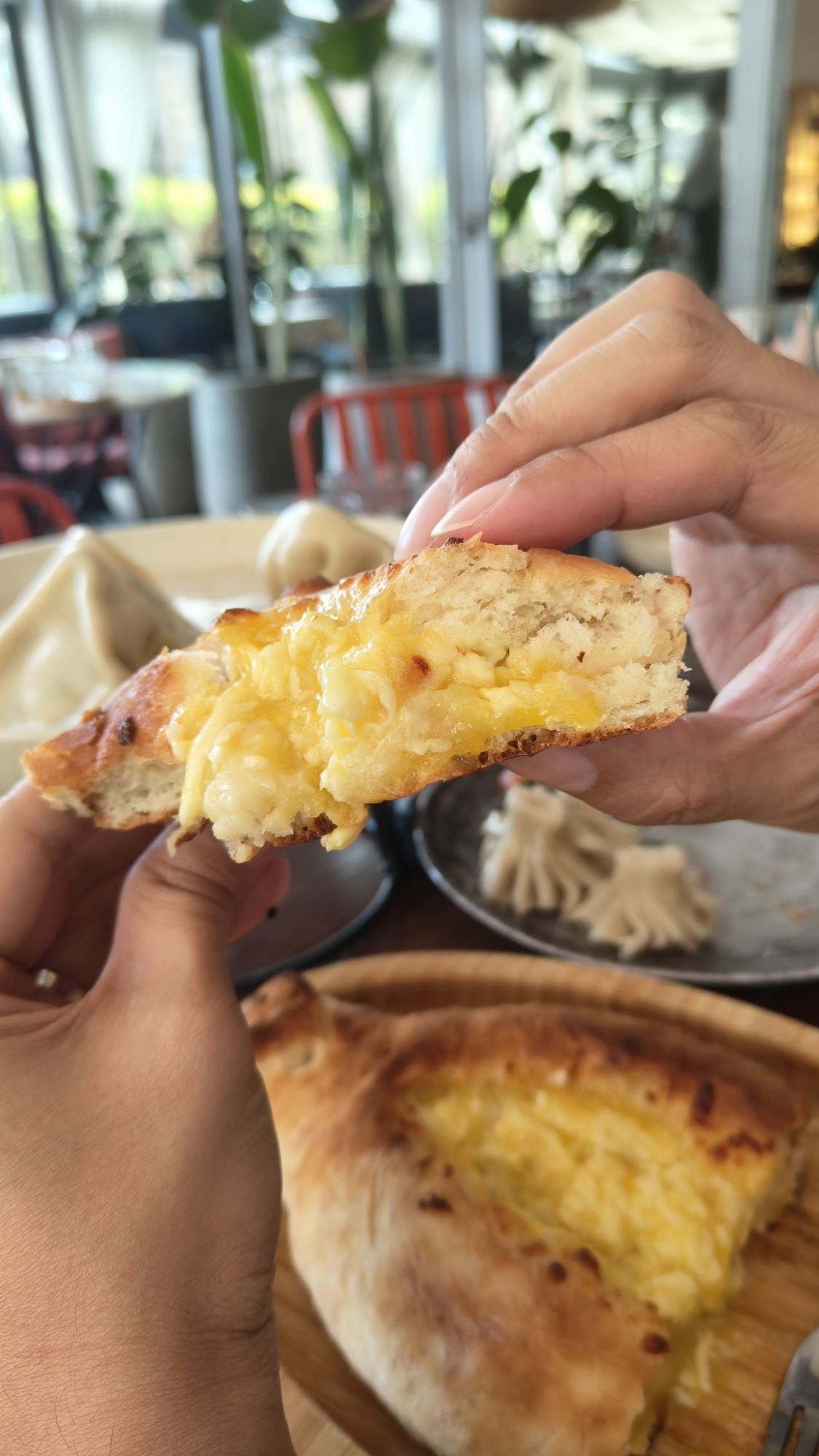
By the end of the session, we had not only learned how much effort went into making these dishes, but also gained a newfound appreciation for the food we had been happily eating throughout the trip.
And then came the best part.
Eating it.
🥟🍞
The khinkali were boiled and served.
The khachapuri emerged warm from the oven.
After spending the afternoon folding, pinching, kneading, and occasionally second-guessing ourselves, it felt especially rewarding to finally sit down and enjoy the fruits of our labour.
Whether the food tasted better because we had made it ourselves or because we were simply hungry after all that work, I’ll never know.
Probably a bit of both.
Looking back, what I remember most wasn’t the number of folds.
It wasn’t even the dumplings themselves.
It was the laughter.
The failed attempts.
The confidence we had before starting.
And the very humbling experience of discovering that something which looked easy on YouTube was anything but.
For a couple of hours, we got to be complete beginners again.
And somehow, that’s one of my favourite memories from Georgia.

 Ashes in the Light
Leave a comment